First Bloom in 2010 – Helleborus
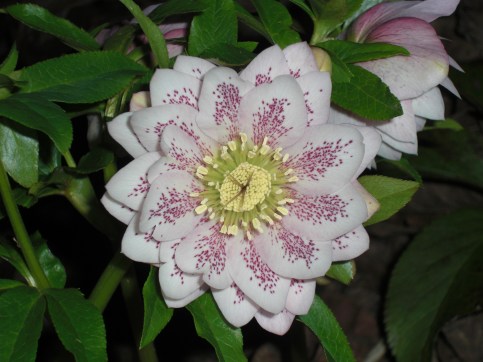
Helleborus
Update 2/15/10: I think the name of this one is Helleborus x hybridus `WD Elegance White’. It’s the only one I’ve found that looks just like it.
Jan 20
Helleborus
Update 2/15/10: I think the name of this one is Helleborus x hybridus `WD Elegance White’. It’s the only one I’ve found that looks just like it.
Jan 17
Here’s what’s blooming this January 15. I’m excited that the Amaryllis are blooming inside and that the Helleborus are starting to bloom outside!!
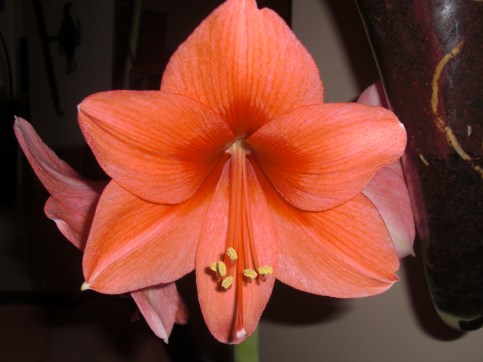
Amaryllis

Amaryllis Apple Blossom
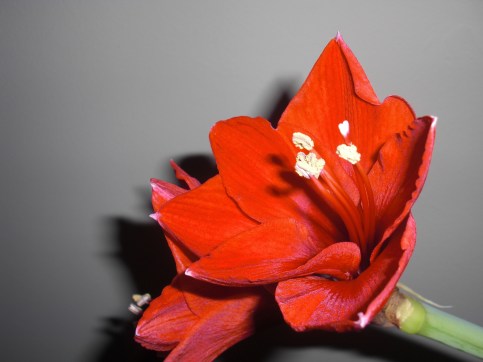
Amaryllis Red Lion
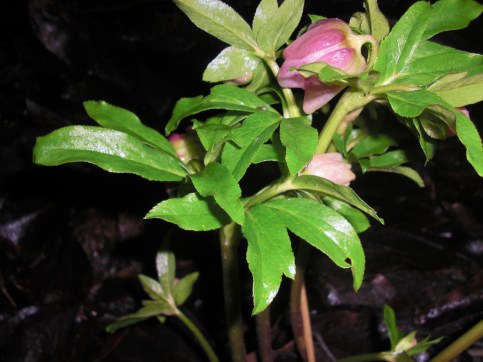
Helleborus
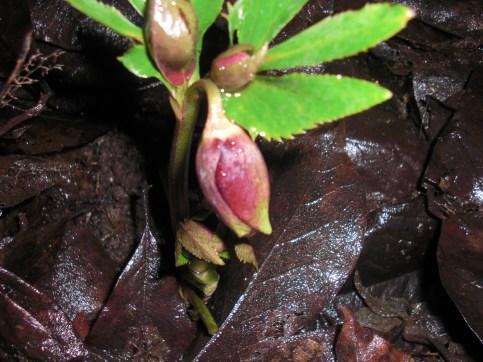
Helleborus Blue Lady
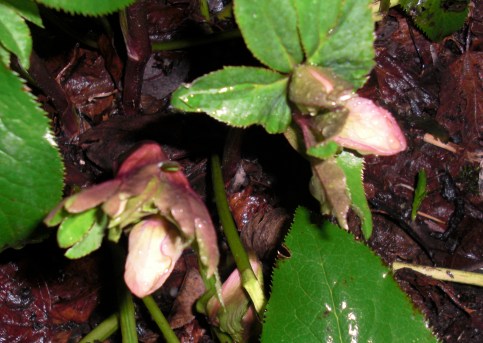
Helleborus
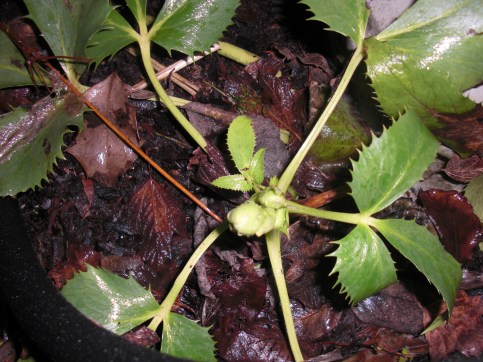
Helleborus
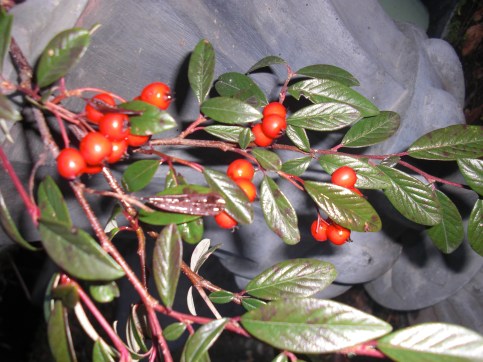
Scarlet Leader Cotoneaster
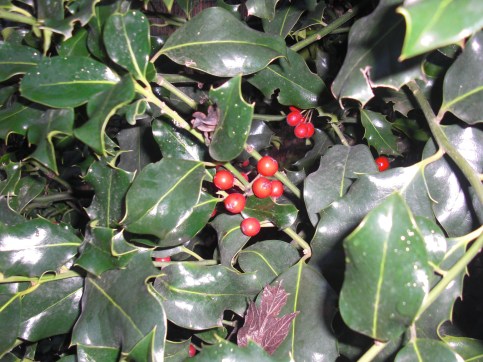
Holly
Jan 9
This past Thursday was my first Master Gardener class on Plant ID and Botany. I thought I’d put my new training to use and attempt to ID a mystery plant in my garden — using it’s leaves. My mystery plant was a real beauty in the summer of 2008; it was tall, leafy and somewhat tropical looking. It even planted itself in the most perfect spot at the back of the garden. Then (sadly) this past summer it didn’t do much at all. It just stayed small with a couple leaves to help me identify it, which probably means it’s a biennial (greenery/roots first year & grows tall/flowers/seeds second year).
Here’s what I know about the plant:
Here are two poor pictures taken of the plant in my garden when it bloomed in 2008. The picture on the left is earlier in the summer and the picture on the right is later in the summer when it was blooming.
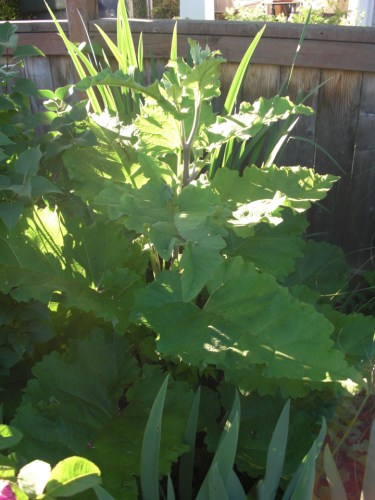
Early Summer 2008
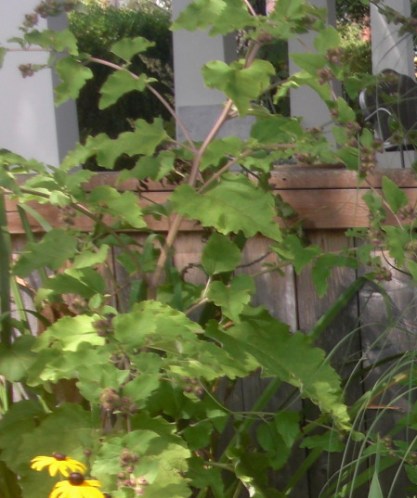
Blooming Late Summer 2008
When using the online tools, none of the sites asked me the right questions needed to identify this unique plant. I was getting frustrated. So I went back to the name of a plant my friend Laura (@InterLeafer on Twitter) recommended this summer — Crambe. The Crambe leaves were identical with my plant but Crambe also has small white flowers that didn’t match. Plus, at the time I wasn’t aware that it was a biennial.
Thinking they could be in the same family, and since I wasn’t getting anywhere with the Plant ID sites, I started looking at Crambe images using Google Image search. To my surprise I accidentally found a thistle flower that looked similar to my plant’s (but a little larger). When I clicked on the image to find out about it, I found yet another thistle image that matched — my plant’s name was Burdock. Can you believe my luck.
According to Wikipedia, Burdock is a group of biennial thistles in the genus Arctium, family Asteraceae — also known as a common weed.
Oh, great. My new beautiful biennial is really just a common weed. I suppose they’d consider Digitalis (Fox Gloves) a weed then too. Anyway, it’s a great new addition to my garden and I’m happy to report there are 4-5 babies that’ll bloom this year. Weed or not, this one is a keeper. After all, its roots are commonly used for medicinal purposes and its flowers inspired the creation of Velcro.
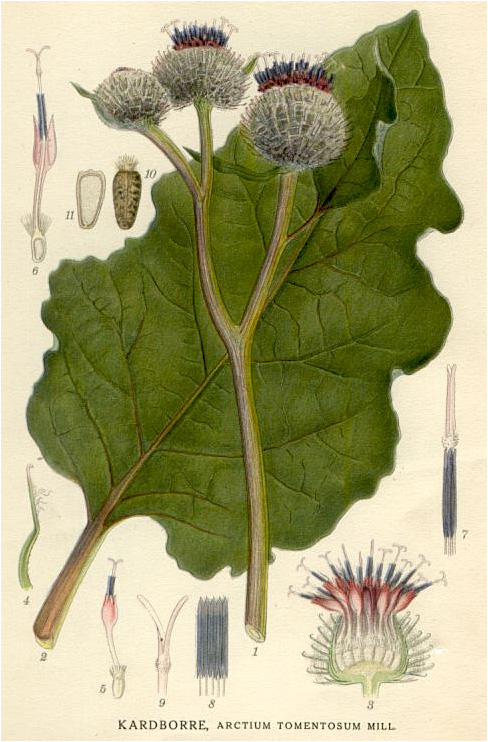
Kardborre is the Swedish botany translation for Burdock. Picture source is unknown.
I guess the point of my story is that even though I wasn’t able to ID this plant using the leaf, I was able to ID the plant based on the flower (by accident). I’m sure I’ll get better at this Plant ID business, until then, I’ll probably continue to ask Laura for help. If you have pictures of plants in your garden/yard that I can test my skills on, send them my way. I need the practice.
Jan 6
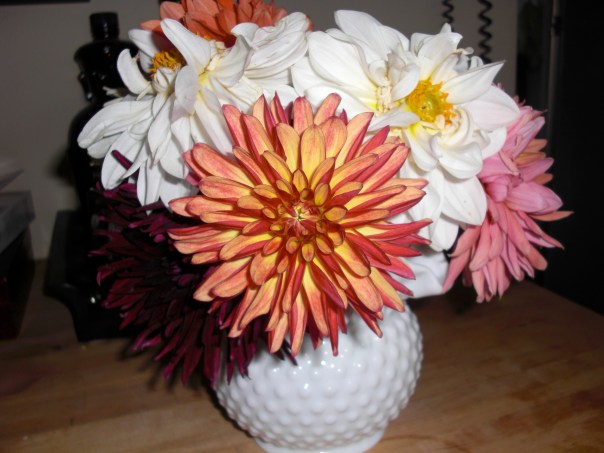
First Dahlias Summer 2009
I continue to be amazed with the number of FREE gardening resources available to the public. Just this past weekend I found out about the Elisabeth C. Miller Horticulture Library in Seattle, the Garden Answers Knowledgebase AND the Plant Answer Line — all FREE to the public.
Aside from having to actually visit the library to borrow books, the other two resources are available online for everyone. Simply visit the library’s Web site and select your desired link:
http://depts.washington.edu/hortlib/index.shtml
If you’re on the road, you can even call the Plant Answer Line at (206) UW-PLANT. Just keep in mind, the folks manning the Plant Answer Line live in the Pacific Northwest (zones 7b – 8b).
If anyone local is interested in joining me, I’d like to make a trip to the library in the next couple weeks. I’m on a mission to find good garden reference books and can’t imagine a better place to do research.
I found these three wonderful resources from watching a Gardening with Ciscoe episode (a local Seattle gardening show) that originally aired on August 15, 2009; click here to see the show details.


FREE-RANGE CHICKEN GARDENS. I have the pleasure of being included in Jessi Bloom's beautiful book (pages 27, 51 upper left, 112, 114-117). Check it out!

THE NEW LOW MAINTENANCE GARDEN. This book by Val Easton is one of my favorite design books.

WICKED PLANTS: Great read about poisonous plants by Amy Stewart.

THE VEGETABLE GARDENER'S BIBLE. My favorite vegetable garden reference book by Edward C. Smith.

GROW. COOK. EAT. by Willi Galloway is a beautiful vegetable garden cookbook. Great recipes and tips on eating ALL parts of the veggie - not just the mainstream parts.
 Gardening in My Rubber Boots